The Current Program....GVPro'24
The Executive Director, Salma Abdul Foundation, (3rd, from the right) Mal. Musa Abdul Accompanied by The Project Manager Haruna Sule, Program Officer Abdul Yusuf, and the Executive Secretary, Aisha Yusuf visit To NAERLS ABU ZARIA,

The team were received by the Institute Deputy and Acting Director, Prof. Y.Y. Sani The Assistant Director Training Prof. M.M. Jaliya, and the Training Coordinator of the Iinstitute, Prof. I. U. Abubakar.
GVPro'24', upcoming Launching and Training program is scheduled for the 1st - June - 2024.
THE PROJECT GVPRO'24 BRIEF:
Green Vegetation Project GVPro’24’ Is aimed to train and empower 1800 Youths across the three Senatorial zones of the 23 Local Government Areas in Kaduna State. In collaboration with:
i. NATIONAL INLAND WATERWAYS AUTHORITY (NIWA) Kaduna Area Office
ii. NATIONAL AGRICULTURAL EXTENSION RESEARCH AND LIAISON SERVICES (NAERLS, ABU ZARIA)
iii.. Key Relevant MDA’s in Kaduna State
Kaduna State Ministry of Agriculture
a. Kaduna State Ministry of Agriculture
b. Agricultural Development Agency (KADA)
c. Kaduna Geographic Information Services (KADGIS)
d. Kaduna State Urban Planning and Development Authority (KASUPDA)
e. Kaduna State Ministry of Environment and Natural Resources
f. Kaduna State Environmental Protection Agency (KEPA)
g. Kaduna State Climate Resilience Project Office.
h. Kaduna State Ministry of Water Resources
I. Kaduna State Water Boards
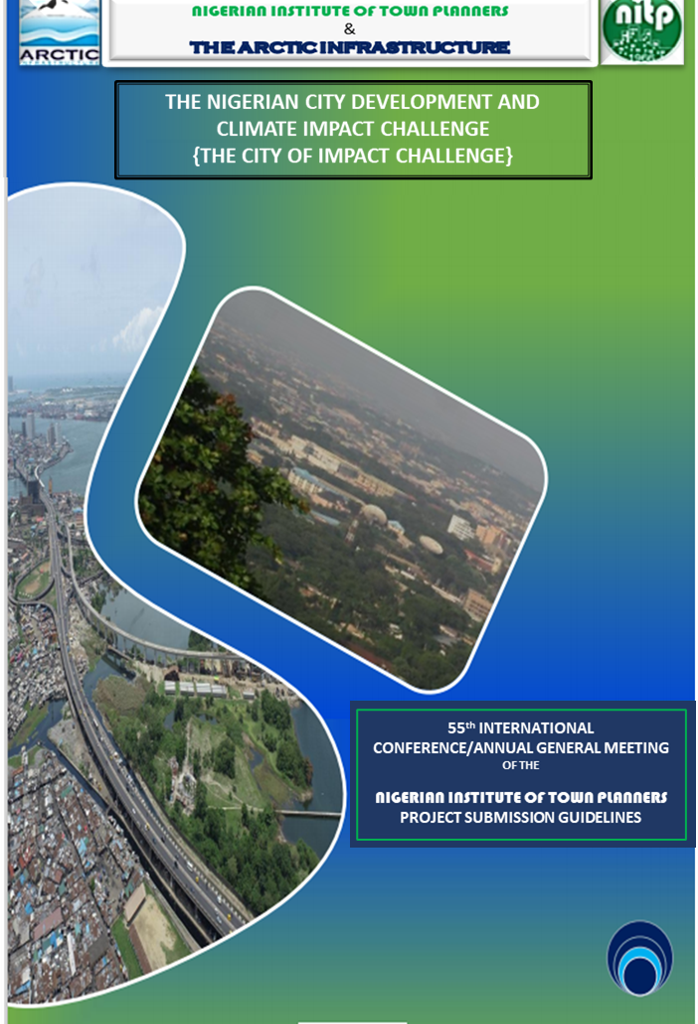
The Nigerian Institute of Town Planners is the leading body in Sustainable, Integrated and Inclusive Planning in Africa. The Institute is to facilitate the attainment of sustainable human settlement and committed to shaping the future of cities around the world

Artic Infrastructure (AI) is a multi-disciplinary private establishment with a broad focus on infrastructure delivery, urban development and the environment. It’s a development organization leading in the planning and implementation of climate resilient cities development, services and Infrastructure. Artic Infrastructure (AI) envisions a world where access to sustainable infrastructure and livable environment will not be restricted to any human being based on social, economics and spatial status. Its committed to improving access to good living conditions and promote harmony between development and environment
SALMA ABDUL FOUNDATION’S GREEN VEGETATION PROJECT GVPro’24
1. INTRODUCTION:
The City Development and Climate Challenge project submission guideline document aims to provide comprehensive instructions and criteria for submitting your project proposal. The challenge seeks to address some of the identified challenges in city development and climate change impact.
A. PRELIMINARY INFORMATION
Project Name:
GREEN VEGETATION PROJECT GVPro’24
Location:
Shika Dam, Sabon Gari LGA, Kaduna State
Organization:
SALMA ABDUL FOUNDATION
Contact:
MUSA ABDUL (C.E.D)
No. 16/17 Organized Shopping Stall, Kwangila, Sabon Gari LGA, Kaduna State, Nigeria.
Tel.: 0818 158 6888,
E-Mail: SalmafonII@gmail.com
Web Site: https://salmaabdulfoundation.com.ng
B. APPLYING ORGANISATION:
1. Type of Organization:
Non- Governmental Organization
2. Overview of the Applying Organization :
Salma Abdul Foundation is a non- governmental and not for profit organization registered by the Nigeria’s Corporate Affairs Commission with the mandate of identifying community that has or lack quality physical and socio- economic development and deploy means of providing them using strategic planning technique and mobilize resources globally. We are among the local nongovernmental organization that since inception engaged in various local activities that promote environment and wellbeing of communities. We are engaged in various projects that comprises of Clean City Project (CCP’22) and BLOSAN Project ’23 that are currently ongoing in Kaduna State. Primary aim of the projects targeted local communities for self-reliance by the teaming youths from both genders of the society with a major focus on human capital developments.
3. Team Information:
1. Musa Abdul (Chief Executive Director); general overseer of the project
2. Sule Haruna (Project Manager); responsible for the supervision of the implementation process of the project objectives
3. Aisha Ibrahim (Assistant Project Manager); will work in closely with the project manager on the supervision of the implementation of the project objectives and in addition manages the finance of the project
4. Abdul Yusuf (Program Officer); responsible for the organization and implementation of programs in-line with the project objectives implementation
5. Dr. Shinom Adinga (Farm Trainer); in addition to the responsibility of the supply and management of the dwarf seedling, he will be the physical trainer along- side co- workers that will be supervising every trainee to ensure he understand the best agronomy being practiced at the project demonstration sites.
6. Aisha Yusuf (Executive Secretary); will double as assistant program officer and the secretary of the project. She will be responsible for all the secretariat administrative matters of the project
C. PROJECT DESCRIPTION
1. Project Category:
☐ Afforestation/ Tree planting
☐ City Coastal Protection/ Management
☐ Capacity for Climate Change and Awareness
2. Project Background
The green vegetation project stands as a testament to our dedication to preserving our planet's precious ecosystems and enhancing the quality of life for all living beings.
Through careful planning, innovation, and collaboration, we aim to create vibrant green spaces to protect the environment that not only beautify our surroundings but also serve as sanctuaries for biodiversity, hubs for recreation, and catalysts for social cohesion and economic prosperity.
In the face of pressing environmental challenges, it is imperative that we take bold and decisive action. By undertaking this project, we seize the opportunity to mitigate the impacts of climate change, improve air quality, and promote a healthier, more resilient environment for generations to come.
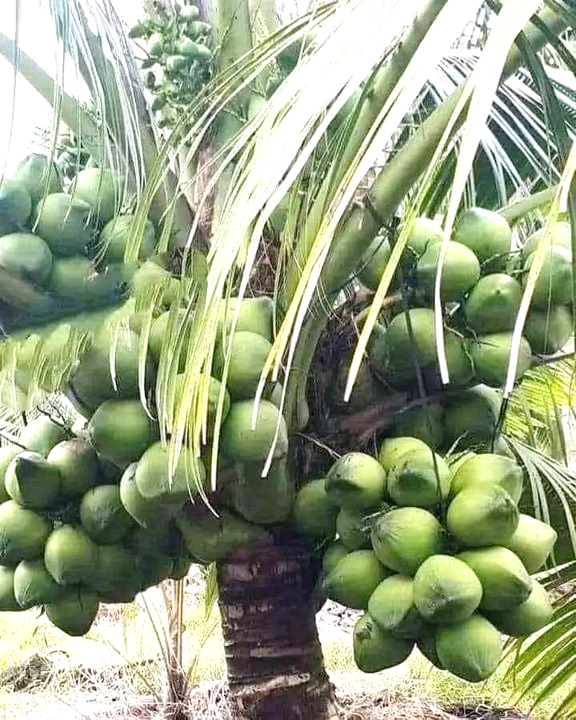
As you are aware, the green vegetation project would feature coconut tree plantation which plays multiple roles towards environmental protection, economic enhancement and improvement of social well- being of communities. Coconut plantations offer a plethora of benefits, ranging from economic opportunities to environmental advantages.
Therefore, the significance of coconut plantation could not be underscored, however, to highlight a few coconuts planting add to:
• Environmental Protection
• Sustainable Agriculture
• Food Security
• Economic Prosperity
• Employment Generation
Therefore, as we embark on this journey of unleashing the potentials of combating the climate change, let us remember that our collective efforts hold the power to make a profound and lasting difference.
Together, we can cultivate a greener, more sustainable future for all.
3. Project Scope
This project targets the three senatorial districts of Kaduna state, where generation of training
participants is on-going across the twenty -three local government areas of the state, commencing
with Zone One Senatorial District. Participants are selected and sponsored by the elected and some selected political appointees from the various local governments within the senatorial zone.
Free application forms were distributed to the elected and political appointees so as to generate
the training participants from their respective constituency domains and sponsor the processes
for participation into the training program.
The project will commence with zone one senatorial district and the theoretical aspect of the training
will be conducted at the National Agricultural Research Extension and Liaison Services (NAERLS),
Ahmadu Bello University, Zaria while the practical session of the training will be conducted at the
Shika Dam demonstration farm site released by National Inland Waterways Authority (NIWA), Kaduna Area Office. The practical training will be coordinated by 360o Organic Farm- line under effective supervision of NAERLS. In zone two senatorial district, the theory session will be conducted at
Kaduna State University (KASU) and the practical session will be conducted at the
Mashigi Plantation Site to be issued by NIWA. The third and the final leg of the project will be conducted at the senatorial zone three where the theory session will be conducted at
Kachia along-side the practical session. At the end of the three years program,
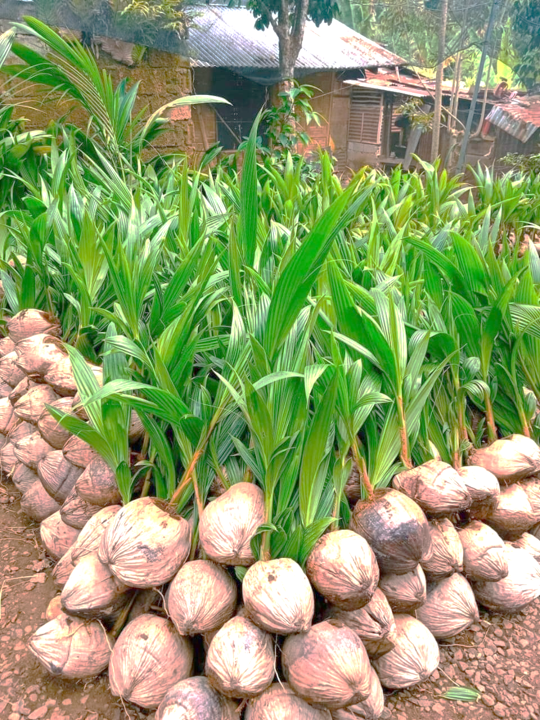
trainees would be certified by NAERLS. Finally, every successful participant will be given a specie of Malaysian Dwarf coconut seedling for plantation at their various places
5. Project Objectives
The project will be achieved through the followings;
Training and development of the project Participants; using political office holders to provide the selected training participants; each senatorial district elected or appointed person will provide names of the beneficiaries that will participate in the training exercise
Provision and timely supervision of training by National Agricultural Extension Research and Liaison services (NAERLS), Ahmadu Bello University, Zaria. Every month a set if trainees will undergo theory session to ensure all the participants attend and understands the training objectives.
Effective supply of Malaysian specie coconut seedling will be monitored and supervised by a joint team of our staff, NAERLS staff and the 360O Organic farm- line who will be the suppliers of the products
Physical training guide will be conducted by the 360O Organic farm-line under close supervision of NAERLS and our staff Provision of 1.2Ha of demonstration farm by the National Inland Waterways Authority (NIWA), Kaduna Area Office; the site was secured as letter of engagement was issued by the above- mentioned Authority and subsequent permits is underway as the process is ongoing
Launching program at the three senatorial districts of Kaduna State is part of the project objectives and it has started with the senatorial district zone one where prominent politicians along- side other relevant stakeholders were gathered at the NAERLS conference center for the launching of green vegetation Project GVPro’24 and speeches were delivered by the various stakeholder as provided in the program manual
Advocacy for funding and technical support from various stakeholders; Though, funding is the most difficult task in every project especially under this kind of initiative as most people in the northern part of Nigeria are not conversant with this type of project
7. Expected Project Impacts
a. Effect on Environment: Mitigation of climate change impact through smart agriculture of coconut plantation
1. Increase coconut plantation to address carbon reduction (300 Plants)
2. To achieve safe environment, make it inclusive, sustainable and habitable
b. Smart Agriculture: Introduction of cash crop coconut plantation (Malaysian Dwarf coconut seed)
1. Increase coconut production in the north- western region of Nigeria
2. Introduction of the new variety to the teeming youth in Kaduna State.
3. Organic method farming of coconut specie
c. Youth engagement and empowerment:
1. Youth engagement through political approach and selection of different participants from the various constituencies in Kaduna State
2. Youth knowledge improvement through theory and practical approach on the new variety specie of coconut
3. Youth will gain employment after successful completion of the training directly or indirectly
8. Target Groups and Project Beneficiaries
Target group direct beneficiaries are farmers, youth and women,
selected from the three senatorial districts of Kaduna State.
• Zone One Senatorial District shall provide six hundred participants
• Zone Two six hundred participants
• Zone Three six hundred participants
One thousand eight hundred (1,800) participants are to be derived from Kaduna State.
Indirect beneficiaries comprise of the permanent staff (15 persons) and temporary staff
(6 persons)
Total number of twenty-one (21) indirect beneficiaries
Kaduna State Development plan aimed to engage NGOs and Civil Societies CSOs
to be effective for advocacy, sensitization and mobilization of communities on the
implementation of the SDP..
They will also be useful in monitoring the opinions of communities about the implementation
of the SDP and other government policies in providing necessary feedback through
active involvement of citizens in the development process.
GVPro’24 compliment the Kaduna State effort towards realizing the objectives of the SDP
through local community engagement by way of outsourcing participants of the
project using grassroot approach with the political office holders.
9. The National Climate Change Policy (2021 – 2030)
Green Vegetation Project aligns with the national and state policy on climate change.
• At the national level mainstreaming climate change concern with relevant sectoral policies,
planning and development processes which is considered critical in achieving the goals and
objectives of the policy Measures taken by the federal government of Nigeria,
Its clearly indicated that government
at all levels should be integrated and inclusive for effective management of
climate change
consideration for mitigation and adaptation.
They should institutionalize strategic climate change assessment and management approaches
to all policies, programs and plans at all levels and among others, ensure all significant development projects are climate change proofed.
• At the state level, Kaduna state government focus on public education,
monitoring systems, and sustainable development initiatives to prepare the state for
future climate challenges. It further addresses the increased extreme weather events
and align with the National Climate Change policy (2021- 2030).
Green vegetation project will equally compliment these policies, hence the project combined in all ramification the policy objectives at the state and national levels. The objective of the
project highlighted above clearly identify inclusiveness towards achieving the mitigation
and adaptation of the climate impact.
At the international level, GVPro’24 is determined to align policies that include job creation
to support the climate action and resilience.
C. ADDITIONAL IMPACT AND BENEFITS
1. Identify and Select the Relevant Sustainable Development Goals (SDGs)
Goal 1: Zero Poverty
Goal 2: No Hunger
Goal 3: Good Health and Well- Being
Goal 4: Quality Education
Goal 5: Gender Equality
Goal 6: Clean Water and Sanitation
Goal 7: Affordable and Clean Energy
Goal 8: Decent work, and Economic Growth
Goal 9: Industry, innovation and Infrastructure
Goal 10: reduce Inequalities
Goal 11: Sustainable Cities and Communities
Goal 12: Responsible Consumption and Production
Goal 13: Climate Action
Goal 14: Life Below Water
Goal 15: Life on Land
Goal 16: Peace, Justice and Strong Institutions
Goal 17: Patnership for the Goals
Further Description of Sustainable Development Goals (SDGs) Alignment
This project tried as much as possible to accommodate and addresses
some of the Sustainable Development Goals through some of the objectives
which aligns with the green vegetation project. Prominent among the
SDGs comprises of Goal number 2,8,12, and 17.
Goal 2: No Hunger; GVPro’24
intends to ensure people and the communities identified
live without hunger treat within their society. This can be achieved by mass production of
coconut products that are basically food and cash crop at the same time. In this regard this
project will help people and governments to eradicate hunger and encourage agricultural
developments as smart intercropping agriculture
will be included during the second year of cultivation.
Goal No 8: Decent Work and Economic Growth; as the project intends to address
unemployment through deployment of strategies framework for training of participants
to acquire knowledge and skill for the best agronomy on the production of coconut.
It’s clearly evident that at the end of the training session which is planned to last for
two and half years, participants will be full ready for self- reliance and to some extent provide windows
to recruit and practically train people on the best
Goal No 12: Responsible Consumption and Production; At the end of the training exercise,
the participants will have the product consumed by them, their immediate community and the public in general. This is because the end product of coconut has multiple offerings to the society at large.
Goal No. 17: Strengthen the means of implementation and revitalize the global partnership
for sustainable development; This project seeks to capture this particular goal as it is related
capacity development, financial inclusion, multi- stakeholder partnership and technology.
These are fundamental in achieving the project objectives and as such we align this project
with the goal to achieve the desire result of the project implementation strategy
2. Alignment with the African Urban Agenda
Green Vegetation Project aligned with the Africa Urban Agenda through advocacy
and mobilization with the grassroot communities in Kaduna State.
The Agenda is targeting urbanization phenomenon for sustainable and
inclusive growth and development.
In Kaduna state, grassroot people are living in absolute poverty and many initiatives
introduced by government hardly reach out to the designated target beneficiaries
due to bureaucratic factors that hinders successful implementation of such initiatives
3. Climate Change Impact
Climate change is the biggest challenge facing humanity.
It is complex, dynamic and requires multi- dimension and multi- sectoral
mitigation and adaptation initiative within and outside a dynamic policy framework
to address it effectively.
Government committee to manage any presumed threat to
its national sustainable development.
Salma Abdul Foundation in its quest to participate in the initiative that will
tackle the impact of
climate change introduced Green vegetation Project GVPro’24, set to initiate a
strategic framework
that will compliment Government effort towards reducing the impact and the
adaptation of climate change. The project planning comprises of mass plantation of
coconut specie (Malaysian dwarf) in the three senatorial zone using strategic plan to train
youth and women to convert not only the impact of the climate change alone but
also to inculcate knowledge of the best agronomy in the coconut plantation and production.
This will be achieved through the strategic incorporation of the most relevant stakeholders in the Environment,
Agriculture and innovation. The three- way approach in this project aim to compliment
government policy on climate change using socio- economic approach.
4. Expected Enhanced Resilience Impact
Increased access to sustainable food
Increased access to sustainable energy
Increased access to sustainable mobility
Improved access to educational services
Improved supply chain security
Improved land use services
Improved bio-diversity
Improved disaster risk management
Improved transportation system
Increased access to sustainable housing
Increased access to water/ sanitation
Increased digitization and access to internet services
*** Increased public access to greenery
*** Incorporates nature- based solutions
*** Raises climate ambitions and reporting
5. Outline of Other Environmental, Social, Economic and Governance Benefits
PROJECT OBJECTIVES: The project will be achieved through the followings;
Training and development of the project Participants; using political office
holders to provide the selected training participants; each senatorial district elected
or appointed person will provide names of the beneficiaries that
will participate in the training exercise
Provision and timely supervision of training by National Agricultural Extension Research
and Liaison services (NAERLS), Ahmadu Bello University, Zaria. Every month a set if trainees
will undergo theory session to ensure all the participants attend and understands the training objectives.
Effective supply of Malaysian specie coconut seedling will be monitored
and supervised by a joint team of our staff, NAERLS staff and the 360O Organic
farm- line who will be the suppliers of the products
Physical training guide will be conducted by the 360O Organic farm-line under close
supervision of NAERLS and our staff Provision of 1.2Ha of demonstration farm by the
National Inland Waterways Authority (NIWA), Kaduna Area Office; the site was secured
as letter of engagement was issued by the above- mentioned Authority and subsequent
permits is underway as the process is ongoing
Launching program at the three senatorial districts of Kaduna State is part of the project
objectives and it has started with the senatorial district zone one where prominent politicians
along- side other relevant stakeholders were gathered at the NAERLS conference center
for the launching of green vegetation Project GVPro’24 and speeches were delivered by
the various stakeholder as provided in the program manual
Advocacy for funding and technical support from various stakeholders; Though,
funding is the most difficult task in every project especially under this kind of initiative as most people in the northern part of Nigeria are not conversant with this type of project
7. Expected Project Impacts
a. Effect on Environment: Mitigation of climate change impact through smart agriculture of coconut plantation
1. Increase coconut plantation to address carbon reduction (300 Plants)
2. To achieve safe environment, make it inclusive, sustainable and habitable
b. Smart Agriculture: Introduction of cash crop coconut plantation (Malaysian Dwarf coconut seed)
1. Increase coconut production in the north- western region of Nigeria
2. Introduction of the new variety to the teeming youth in Kaduna State.
3. Organic method farming of coconut specie
c. Youth engagement and empowerment:
1. Youth engagement through political approach and selection of different participants
from the various constituencies in Kaduna State
2. Youth knowledge improvement through theory and practical
approach on the new variety specie of coconut
3. Youth will gain employment after successful completion of the
training directly or indirectly
8. Target Groups and Project Beneficiaries
Target group direct beneficiaries are farmers, youth and women selected
from the three senatorial districts of Kaduna State
• Zone One Senatorial District shall provide six hundred participants
• Zone Two six hundred participants
• Zone Three six hundred participants
One thousand eight hundred (1,800) participants
are to be derived from Kaduna State.
Indirect beneficiaries comprise
of the permanent staff (15 persons)
and temporary staff (6 persons)
Total number of twenty-one (21) indirect beneficiaries
Outline of Other Environmental, Social, Economic and Governance Benefits
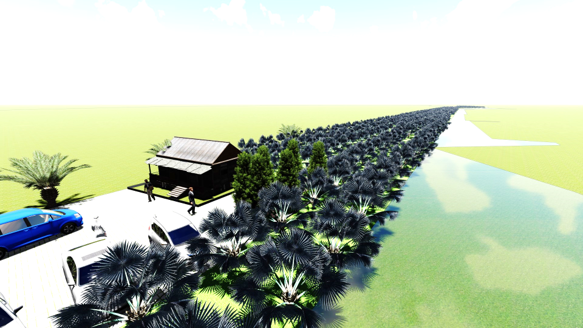
Environmental: Improved environment and air quality to provide mitigation on carbon dioxide, protect the water bank from the consistent erosion and reduce the level of flood disaster by distancing residential development around the coastal areas of the river and its associated water body.
Social: create enabling Agri-business atmosphere along- side leisure experience for people to pass a good time through relaxation within the plantation site and engage the populace in a smart agriculture that will provide wealth to the teaming youth and women.
Governance Benefits: Immense benefit for government through payment of tax, job creation to engage women and youth domiciling in the area and its immediate environs. The program will provide opportunity to for governments at all level to prepare new policies that will align with the nature of the project so also to develop industry base that will support the products output.
PROJECT PLAN AND TYPE OF SUPPORT REQUIRED
Current Stage of the Project
The project is on-going at various stage of implementation.
• Planning, preparation and permit processes; Project initiative,
advocacy, review and preparation
• Project site securing and preparation; Site request, advocacy, design,
report preparation, processing and approvals
• Advocacy and Launching Program; Advocacy,
invitation and document prints
• Selection of trainees; Sharing of participatory/ registration form
• Sourcing the seedling; Advocacy and fund mobilization
Project scooping and preparation
Pre- feasibility
Feasibility
Pre- Implementation
Implementation
Starting and Ending Period of the Project
a. No of Phases: Three (3) Phases: Zone One, Two and Three
b. Starting Date:
1 June, 2024 Launching of Phase one (Zone One Senatorial Zone
comprises of seven local governments area and theory
session of the training will commence in September.
Zone Two will be a continuous
activity and will come into action in October, while the third
phase will come into effect at the end of November 2024.
Within these period training and plantation will be fully delivered
c. Ending Date: 31st May, 2027
Types of Support Required
Capacity building/ training on project delivery
Development of business case/feasibility studies
Investment finance
Project investment brochure
Project structuring
Promotion of the project to both the public and private investors
Technical assistance to support the project from the current
stage to the implementation stage
Anticipated Sources of Project Fund
Party Contribution %
1 Project Developer 10%
2 Partners 40%
3 Government 20%
4 Others (Donors) 30%
TYPES OF FINANCE REQUIRED
Bonds, Private investment, Equity/Grants, Public- private partnership
Grants, Public finance, Loan from commercial Banks,
Others/ Donation, Loan from international finance institutions
MONITORING AND EVALUATION
The green vegetation project was designed to create job for the
youth and women in Kaduna state, with a well-articulated structure that
will incorporate external monitoring, supervision and evaluation by relevant
organizations that comprises of Federal, State, Local Governments,
Traditional Rulers, Community Leaders, Corporate and Individual stakeholders,
they were selected from various sectors comprising of Environment,
Agriculture and Innovation.
Furthermore, Salma Foundation will take the lead in providing key officers
to manage the affairs of the project.
Under the foundation, total number of twenty- one staff will be engaged to
manage the project implementation to be headed by the Project Manager who
will be a member of the project board of directors with effective calendar that
will guide the project action plan.
The action plan calendar was design to guide the entire project from the beginning
to the end with strict laid rules that will be in constant evaluation by the board of directors.